
9 February 2026
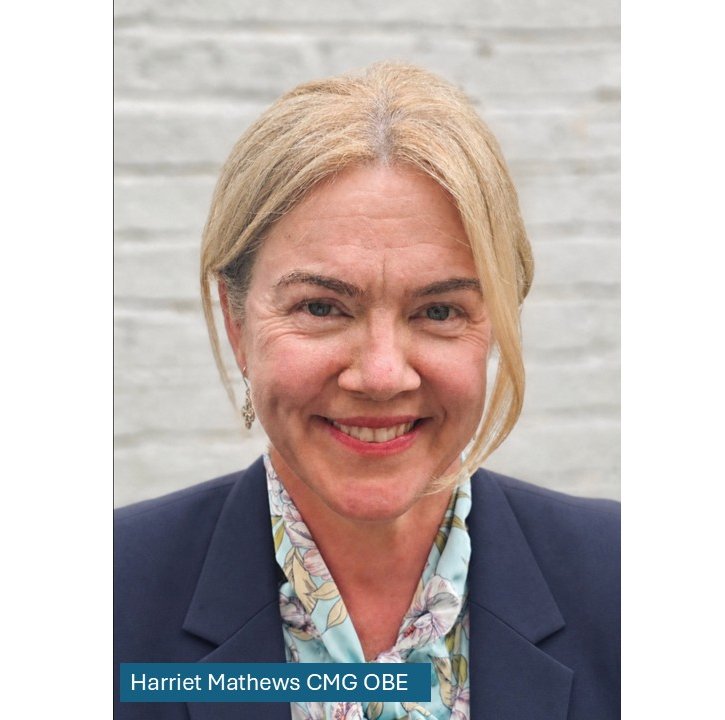
A report by the Bishop of Chelmsford, the Rt Rev'd Dr Guli Francis Dehqani
Between 23-29 January, together with the bishops of Gloucester and Norwich, I travelled to Israel and Palestine, to visit the Episcopal Diocese of Jerusalem and to meet with, listen to and pray with local Palestinian Christian communities and a number of other groups. We were accompanied by Martha Jarvis, the Anglican Representative to the United Nations, and supported by Charles Reed, the Church of England’s Foreign Policy Advisor and Revd Canon Richard Sewell, the Dean of St George’s College in Jerusalem.
For the duration of our visit we stayed at St George’s College, from which we did a number of day trips.
Following our visit we published a letter in The Guardian reflecting on the deteriorating situation facing Palestinian Christians in the occupied West Bank and pressing the British government to protect the vulnerable. The letter can be read here.
Friday 23 January - Jerusalem
Having landed in Tel Avi that afternoon, following an early morning flight from Luton airport, we travelled to Jerusalem where we joined the Bishop of Kingston and two others from the Diocese of Southwark for an informal dinner at the Jerusalem Hotel, Jerusalem.
Saturday 24 January - Ramallah and Birzeit, West Bank
We spent the day with Father Fadi Diab, the Anglican parish priest at St Andrew’s, Ramallah, visiting diocesan institutions like the Arab Evangelical School and the Vocational Training Centre.
We were also able to visit Birzeit to meet with the Nassir family.
Arab Evangelical School
Mr. Iyad Rafidi, the Headteacher of the Arab Evangelical School in Ramallah, explained that the school is the only diocesan school with a majority of Christian students, serving a student body of around 850 across all grades.
Founded in 1954 as a home for impoverished and orphaned girls, the School has become co-ed. It operates on the premise that fulfilling its Christian mission comes through serving the Palestinian community in all its diversity, regardless of students’ religion, race, gender, and socio-economic status.
The school’s mission is to develop the student as a ‘whole person’, to be respected as a human being, having his or her own unique character. The school seeks to educate young Palestinians to become active citizens who participate in developing a humanistic and democratic society, enhancing religious and national heritage in Palestine, and promoting mutual understanding and tolerance among religions and cultures.
Iyad explained how the increasing restrictions on travel across the West Bank since the Hamas terrorist attacks of 7 October 2023 were making it that much harder for children and teachers to attend and work at the school. He explained that a parent’s decision to invest in their child’s education was a form of resistance. Hope is a word that is only used at Easter but practiced daily.
The school places a high priority on the emotional and psychological health of the student with counsellors on hand to help children deal with the daily trauma of living under occupation. Sadly, there is little to no contact between Palestinian and Israeli children. Palestinian children invariably only meet Israelis at check points.
Vocational Training Centre
The vocational school was established in 2000 and provides students with an opportunity to learn towards a certificate in either hospitality or information technology. The Centre’s Director, Mr Giovanni Anbar, explained that before 7th October 2023, in a region plagued by high unemployment, nearly 100% of students found immediate employment following graduation. Despite the pressing economic challenges across the West Bank, the vocational school was full but it was increasingly hard for students to find employment.
Giovanni spoke of his daily struggles of going to and from work and having to negotiate the localised system of road closures and security checks that restrict movement across the West Bank, which he compared to a form of strangulation.
Meeting with Pastor Munther Isaac
We had the opportunity at St Andrew’s to sit with Father Fadi and Pastor Munther Isaac, from the Lutheran Church in Ramallah, to discuss the Kairos Palestine report, A Moment of Truth: Faith in a Time of Genocide, which was published in November 2025.
Munther and Fadi explained the long consultation process that informed the report’s research and writing. They explained the current reality of life under occupation and the existential threat now facing the Christian community in Palestine. Palestinians were being forced from their land into seven unconnected high density urban areas. They described this system of forced displacement and the discriminatory system they lived under as apartheid.
They blamed the international community for its refusal to hold successive Israeli governments accountable for their actions under international law. They thought western churches through their silence had been complicit in contributing to this culture of impunity. They challenged churches to do more to respond to this reality.
Al Haq
Before leaving Ramallah, we met with Dr Shawan Jabarin, the Director of Al Haq, a Palestinian human rights organisation located on the premises of St Andrew’s.
Established in 1979 to protect and promote human rights and the rule of law in the Occupied Palestinian Territory (OPT), AL Haq documents violations of the individual and collective rights of Palestinians in the OPT, irrespective of the identity of the perpetrator. It seeks to end such breaches by way of advocacy before national and international mechanisms and by holding the violators accountable.
Shawan explained the growing difficulties Al Huq faces in continuing its work. In September 2025, Al Haq was sanctioned, alongside 2 other Palestinian human rights organisations, by the US. The US sanctions freeze assets under US jurisdiction, block financial transactions, and have caused banks to close Al-Haq's accounts with the result that they can’t receive funds to pay for salaries.
UN experts see this as part of a concerted campaign by the US Administration to undermine the International Criminal Court. Much of the international recognition of the human rights violations in Gaza is owed to the tireless work of Al-Haq and organisations like it which have documented and exposed the reality on the ground at a time when foreign journalists and observers are barred from entry.
Lunch with the Nassir family
We then travelled to the neighboring parish of St Peter’s, Birzeit, to meet with Lulu and Sammi Nassir to demonstrate our continued support whilst their 25 year old daughter, Layan, is serving an 8 month prison sentence in an Israeli prison.
Layan was first arrested in 2021, aged 21, purportedly for her support of a student-led union (the Democratic Progressive Student Pole), which an Israeli military order later deemed illegal. Lulu is due to be released from prison on 15 May 2026 when she is expected to continue her work with the YMCA.
The return journey from Birzeit to Jerusalem, a distance of no more than 8 miles, took three and half hours given the road closures, checkpoints and intensified security – a frustration for us but a daily reality and humiliation for Palestinian people.
Sunday 25 January, Nablus
We spent the day in Nablus with the local Anglican community of St Philip’s and meeting with SEEDS, a local Palestinian civil society group working for peace and reconciliation.
St Philip's Nablus
We began by worshipping with the local Anglican community at St Philip’s, Nablus where we were welcomed by Rev’d Jameel Maher Khader, the parish priest who explained that the Church is named after St Philip the Deacon, whose powerful preaching won many converts in Nablus (Samaria) [Acts 8]. In welcoming us, Fr Jameel noted that while they were allowed to travel freely in this, his land, he was unable to do so due to the daily restrictions and the separation wall.
Fr Jameel explained that St Philip’s ministry includes an ecumenical youth group, women’s group and a Sunday School with bus transport provided. These activities provided support and hope to the very small Anglican community in Nablus. He estimated that 10 years ago there were 1,500 Christians across all denominations in Nablus, but this has fallen to 600.
Fr Jameel presided at the service and, at his invitation, I was delighted to preach on the theme of the conversion of St Paul. It was a moving experience during which I couldn’t help but remember that other beleaguered Anglican community in Iran, so close to my heart, and also part of the Province of Jerusalem and the Middle East.
Following the service, we were able to meet with parishioners over a light lunch to hear more about what it means to be a Palestinian Christian in the West Bank today and their hopes and anxieties for the future. The Deputy of Mayor of Nablus also joined the discussion.
Tour of the Old City with Xavier Abu Eid and Seeds (local NGO)
Xavier Abu Eid, a Palestinian Christian who is a political analyst and former adviser to the Palestine Liberation Organization escorted us round the Old City of Nablus. We were joined by representatives of SEEDS, an educational and cultural non-governmental organization, working to strengthen the role of youth, children and women in the society.
The importance of the Old Town of Nablus results from its being a historic place consisting of buildings constructed in traditional architectural style, utilizing methods no longer in use, together with a unique urban pattern, which is well preserved. The regular street grid dating from Roman times is still discernible in the structure of the city. In some places excavations have revealed portions of Roman buildings that are still visible. We were also treated to a taste of the Palestinian delicacy Kanafe, freshly made.
Raed Debiy, the Director of SEEDS, explained how Nablus is one of the oldest cities in the world, dating back over 5600 years, and has a long history of coexistence and tolerance between the three religions; Islam, Christianity and Samarita. We were able to visit a SEEDs project – the Garden of Unity - a rare space in the city for the three main religions to come together, actively interact and learn more about one another and to promote unity and common understanding. The garden was originally the garden of a synagogue and has been kindly dedicated by the Samaritan community in Nablus.
St George's Jerusalem
On our return to Jerusalem, we joined Archbishop Hosam in a service at St George’s Cathedral to mark the Week of Prayer for Christian Unity. Also participating in the service were representatives from other churches in Jerusalem.
Following the service, the we had dinner with Revd Sally Anzar who is the first female Palestinian pastor ordained in the Holy Land.
Sally was commissioned by the Evangelical Lutheran Church in Jordan and the Holy Land in 2023. She now leads the English-speaking congregations and focuses on youth ministry. Her ordination and ministry mark a historic step for women in the region's Christian leadership.
Monday 26 January
Beit Jala and Bethlehem
The day was spent planting olive trees with Rabbis for Human Rights in the Al Makhrour Valley, and with Wi’iam in Bethlehem.
Rabbis for Human Rights
We spent the morning planting olive trees with Rabbis for Human Rights on a Palestinian Christian farm, outside Beit Jala in the beautiful Al Makhrour valley, a UNESCO world heritage site, in the occupied Palestinian territory.
Rabbis for Human Rights is non-partisan and uniquely activist, bringing together rabbis from across all denominations and rabbinical schools in Israel. Among its members are rabbis in public roles, educators, and community rabbis, who are able to generate both grassroots and conceptual change.
One of the current challenges facing many Palestinian farmers in the West Bank is settler violence and damage to olive trees. By planting new olive trees, we were able to join with rabbis and Israeli Jews in an act of hope for peace and justice, standing in solidarity with Palestinian farmers. The morning also provided an opportunity to meet with and hear from a range of Israeli jews on the challenges of working together for a more just society, grounded in Jewish values of human dignity, justice, and equality.
Over lunch, we joined in a group discussion about the efficacy of a new amendment to the Israeli Penal Law currently being considered by the Knesset, the Israeli Parliament, making it mandatory for Israeli courts to impose the death penalty against individuals convicted of killing an Israeli “either intentionally or recklessly” if the act is motivated by “racism or hostility towards the public” and “committed with the objective of harming the State of Israel or the rebirth of the Jewish people”.
Wi’am Centre for Reconciliation
On the return to Jerusalem we stopped off in Bethlehem, to meet with Zoughbi Zoughbi, the Director of the Wi'am Center for Reconciliation.
Established in 1994, Wi’am is a grassroots civil society organisation based in Bethlehem. It works to resolve disputes within the Palestinian community at the grassroots level by implementing the traditional Arab form of mediation, known as Sulha, along with Western models of conflict transformation. They have programs that empower children, youth, women and men, addressing the psychological and physiological consequences of long-term conflict. Their work is very much on trauma coping rather than trauma healing.
As part of our time in Bethlehem, we visited the Aida Refugee Camp, home to about 7,000 people, including around 2,500 children, living in overcrowded conditions. One of the places of joy and hope for children in the camp is the artificial soccer pitch that was installed in 2021 on land owned by the Armenian Orthodox Church.
We heard how, in recent months, the Israeli authorities have placed a demolition order on the pitch on the grounds that its proximity to the separation wall constitutes a security threat. The Aida Youth Center have appealed to FIFA to intercede on their behalf to stop the destruction of a pitch used by children and players who have represented Palestine in women’s football at the international youth level.
Tuesday 27 January
Hebron and Jersualem
We spent the day in Hebron where we visited the Tombs of the Patriarch as part of a wider exposure tour organised by Breaking the Silence.
The tombs of the patriarchs
We visited the Tombs of the Patriarchs, the burial place of three biblical couples — Abraham and Sarah, Isaac and Rebekah, and Jacob and Leah. It is the second holiest site in Judaism (after the Western Wall), and is sacred also to Christianity and Islam. The site is the dominant feature of central Hebron, thanks to the fortress-like wall Herod the Great built around it. Inside, we saw how six cenotaphs covered with decorated tapestries represent the tombs of the patriarchs. The burial places of Abraham, Sarah, Isaac, Rebekah, Jacob and Leah are in the cave beneath, to which access is not permitted.
Breaking the Silence
Our visit to Hebron was organised by Breaking the Silence, an organisation of veteran soldiers who have served in the Israeli military since the start of the Second Intifada and have taken it upon themselves to expose the public to the reality of everyday life in Palestine. They endeavor to stimulate public debate about the price paid for a reality in which young soldiers face a civilian population on a daily basis, and are engaged in the control of that population’s everyday life. The work of Breaking the Silence aims to bring an end to the occupation.
During the tour we learnt how Hebron, with a population of some 230,000 people, is the largest city in the West Bank and the only Palestinian city with an Israeli settlement in the heart of it. There are some 800 settlers in Hebron.
The tour explored and exposed the harsh consequences of the policy of separation and the military presence in the city that has been established to provide protection and safety for settlers. This has created a ghost town effect with roughly 42% of Palestinian homes in the Old City center abandoned and 77% of businesses closed.
Breaking the Silence explained that as a rough rule of thumb there is one soldier for each settler. As a result, nearly 2000 soldiers protect the settlers in Hebron. This creates a reality where the military directly enables settler expansion and restricts Palestinian life, which mirrors the dynamic in the wider West Bank where the Israeli Defence Force (IDF) often acts to secure illegal outpost.
The former soldier explained to us that the military strategy in Hebron is to make life unbearable for Palestinians—through checkpoints, closed roads, and harassment—forcing people to leave their homes voluntarily (soft displacement). We saw the so called ‘sterile’ areas where Palestinians are not permitted to walk. Those few who still have homes on ‘sterile’ streets are not allowed to use their front doors but may come and go only via the back entrance. Settler violence, often protected or ignored by the IDF, is a major component of this displacement strategy. Incidents include throwing garbage at Palestinians, attacking homes, destroying property, and physical assault. We were offered lunch by a family living in the hills outside Hebron whose lives are constantly disrupted by attacks from settlers.
St James Armenian Cathedral
On our return to Jerusalem, we joined the service at St James Armenian Cathedral to mark the Week of Prayer for Christian unity. Then, back at St George’s, we again paused to pray, conscious that the UK would be marking Holocaust Memorial Day.
That evening, we met with Archbishop Naoum Hosam, the Anglican Archbishop in Jerusalem, to learn more about the work of the Diocese.
The Diocese is home to about 7000 Anglicans worshiping within twenty-eight different congregations. The Diocese is also responsible for more than thirty institutions, including hospitals, schools, clinics, rehabilitation centers, guesthouses, and retirement homes. Archbishop Hosam oversees all of these parishes and institutions, which are scattered across five separate countries or territories: Jordan, Palestine, Lebanon, Syria, and Israel.
This geographic spread adds innumerable complications to the work of the Diocese due to the many borders, checkpoints, and national governments involved.
I was also able to speak with ++Hosam about the situation of the Anglican Church in Iran which, currently without a bishop and struggling under enormous pressures, comes under his responsibility.
Wednesday 28 January
Jerusalem - visit to the Al Aqsa compound and the Church of the Holy Sepulchre
The Bishop of Norwich having left, the Bishop of Gloucester and I visited the Al-Aqsa Mosque compound, known to Muslims as the Haram al-Sharif (Noble Sanctuary) and to Jews as the Temple Mount. It is one of the most contested religious sites in the world. It is located in the Old City of Jerusalem, a site sacred to Muslims, Jews, and Christians.
A long-standing "status quo" agreement, overseen by Jordan, dictates that while non-Muslims can visit, only Muslims are permitted to pray within the compound. In recent years, the compound has become a frequent flashpoint for violence, with increased, often daily, visits by Israeli settlers and right-wing politicians, accompanied by police, which Palestinians describe as "incursions" or "raids". We witnessed the presence of Israeli soldiers in the grounds during our visit. Reports indicate that some Jewish visitors have been performing prayers and rituals in the compound, violating the status quo.
We concluded our trip with a visit to the Church of the Holy Sepulchre, located in the Christian Quarter of Jerusalem's Old City. It is one of Christianity's holiest sites, marking the traditional locations of Jesus's crucifixion (Calvary) and burial/resurrection. Founded in the 4th century by Constantine the Great, it houses the Edicule, the centrally located shrine that encloses the traditional site of Jesus Christ’s tomb. It is the final station of the Via Dolorosa. There, we reflected and prayed on what we had seen and heard over the course of our visit.
And just before leaving, there was just time for a quick stop at a fruit stall for a drink of fresh pomegranate juice and a taste of home for me.