
4 August 2022
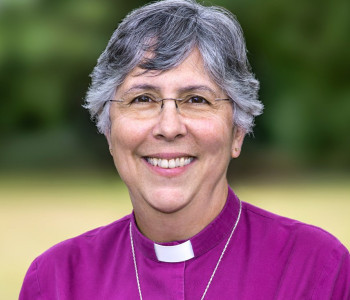
The Rt Rev Dr Guli Francis-Dehqani, the Bishop of Chelmsford delivered the keynote address at the at the Interfaith Plenary which took place this afternoon.
The Rt Rev Dr Guli Francis-Dehqani, the Bishop of Chelmsford delivered the keynote address at the at the Interfaith Plenary which took place this afternoon.
A transcript of the address can be read below.
Key note address at Lambeth Conference (2022)
Plenary session on Interfaith Relations: “Hospitality and Generosity”
Bible passage set for the day: 1 Peter. 4
It goes without saying that it’s an honour to address you in this plenary. The subject of interfaith relationships touches most, if not all of us, in some shape or form as we live and minister in a pluralist world of many faiths and none. But our vastly varied contexts mean that our thinking and responses will probably be very different from one another. I speak out of my own particular experiences which relate especially to Christian-Muslim relations but I hope that some of the themes I touch on will be helpful, if nothing else, to stimulate thinking and discussion. Let me begin, if I may, with a brief biography so you can place what I say within the context of my story.
Though I’m now a bishop in the Church of England, I started life in Iran where I was born and grew up. It was in the tiny Anglican community there that the seeds of my early faith were planted. My father was a Muslim convert from a small village in the centre of the country and by the time I was born, he was already Bishop of the fledgling Diocese of Iran; and my mother, the daughter and granddaughter of British missionaries, was herself born and raised in Iran. I lived an unusual life between and betwixt the worlds of Islam and Christianity, Persian and English, Eastern and Western influences.
This unusual childhood was what I considered normal and for the most part my two worlds of school and wider society on one hand, and home and church life on the other coexisted reasonably peaceably with some occasional overlap. All that changed as the events which led to the Islamic Revolution of 1979 began to unfold. At school I began to be ostracised both by friends and teachers and at home, the church was coming under increasing pressure. Over a period of 18 months, institutions such as hospitals and schools were forcibly taken over or closed, church offices and the bishop’s house were ransacked, raided and confiscated, the church’s financial assets were frozen, one of the clergy was found murdered in his study, and my father was briefly imprisoned before an attack on his life in which he survived but my mother was injured.
For us as a family, events culminated in the murder of my brother who was 24 at the time. His car was ambushed on his way back from work and he was shot in the head. My father was out of the country for meetings at the time and although no one was ever brought to justice we’ve always understood that my brother was targeted because of his association with the church and because he was his father’s son. After the funeral, the rest of the family and I joined my father in England, assuming we’d be back home within a few weeks or months. That was not to be and having arrived as a refugee aged 14, here I still am, over 40 years later, now a British citizen. My father continued working as Bishop in Iran in exile until his retirement and dedicated his life to supporting and encouraging Christians still in Iran, working with Persians (Muslim and Christian) in this country, and writing and translating Christian literature in Persian. During his episcopate he attended three Lambeth Conferences. Both my parents have now died, and the diocese is extremely isolated and currently without a bishop.
These formative experiences have shaped my thinking and continue to inform my understanding of how we, as Christians, engage with other faiths, especially when elements within those faiths wish us harm. It’s not been easy or straightforward and has involved embracing the concept of paradox - that ability to hold together certain apparent contradictions to help navigate the way faithfully through rough terrain.
For example, I have known Islam both as a great civilization which over the centuries has gifted to the world some of the greatest scientific advances, architectural designs, poetic and literary masterpieces and spiritual insights - the photo you see now is the only one I have of me with my grandfather, a Godly and wonderful Muslim man of deep faith; but I have also known Islam as a force which has done my family and the church in Iran great harm. It is difficult, but necessary, somehow to hold both these threads together and remember that the evils which have befallen the church are not a reflection on the whole Islamic faith. In the words of the late great Kenneth Cragg, while “certainly an ‘Islam’ was guilty,” nevertheless “the Islam that is indicated in what befell the [Persian] Church might have stayed its hand by counsels no less claiming its name.”[i] (i)
So, what impact has this way of thinking had on my encounters with Muslims in the west. Well, I try to see the best, to be respectful, learn and understand more deeply. And alongside this, I’ve also sought to be honest, to tell the story of the Church in Iran and to ask, respectfully and gently, if they are willing to condemn this element of their faith, even as we condemn the Christianity that fought the Crusades or which shows itself in some of the far right politics of the western world today. These are an attempt to hold together, in tension, both the Christian call to forgiveness and to justice – immense and complex themes which we don’t have time to engage with further now. But suffice to say that my story and experiences, indeed those of all of us, sit today within the context of the theme of this plenary, Hospitality and Generosity, and against the backdrop of today’s bible passage from 1 Peter Chapter 4 which itself holds the importance of hospitality and generosity alongside the reality of suffering and persecution.
It's important to note that Peter doesn’t glorify suffering for its own sake and neither does he suggest it should be endured passively. Again, this relates to the call for Christians to act and speak for justice, wherever and whenever possible. Nevertheless, Peter also reminds his small community that they shouldn’t be surprised by the suffering they are undergoing because Christ himself suffered and in that sense suffering is the default for any Christian community. Indeed, perhaps the norm for Christianity is that it should be persecuted. And Peter encourages them, and us, to associate any suffering we undergo because of faith, with the suffering of Christ, thereby finding comfort and even joy in its midst; in a mysterious way suffering can take us closer to Christ. This is how my father described it at the height of the Revolution in Iran: “The way of the cross has suddenly become so meaningful that we have willingly walked in it with our Lord near us. Our numbers have become smaller, our earthly supports have gone, but we are learning the meaning of faith in a new and deeper way.”
So this is part of our thinking as Christians and should permeate our practice when we are seeking to relate to people of other faiths even when they may be doing us harm. The paradox is that whilst there is injustice which must be spoken out against, the suffering is also taking us closer to Christ and is part of our calling as people of faith. Put this, then, alongside the themes of hospitality and generosity, both in 1 Peter 4 but also in much developed Anglican theology around interfaith relations, most especially perhaps in the document Generous Love: An Anglican theology of interfaith relations that was endorsed by Lambeth 2008.
Now, it is right to acknowledge that the proper reading of 1 Peter 4 relates more specifically to hospitality for those within the Church family. And yet there are many scriptural passages and theological traditions that help us expand this familial imperative to one that Christians, through the Church, extend to the wider world – God’s love and generous hospitality, demonstrated through the inner life of the Trinity, draws us in and sends us forth to do likewise. This is how Generous Love expresses it:
“Our pressing need to renew our relationships with people of different faiths must be grounded theologically in our understanding of the reality of the God who is Trinity. Father, Son and Spirit abide in one another in a life which is ‘a dynamic, eternal and unending movement of self-giving’. In our meeting with people of different faiths, we are called to mirror, however imperfectly, this dynamic of sending and abiding. So our encounters lead us deeper into the very heart of God and strengthen our resolve for inter faith engagement.”[ii]
And this, of course, has resonances with Kenneth Cragg’s life and work in which he emphasised the need for Christians to learn to be both hosts and guests, with all the power balances and paradoxes which that involves. Cragg wrote: “We find ourselves guests at God’s banquet. ‘You spread a table for me’ was how a psalmist saw it, speaking of the very landscape as a scene of hospitality.”[iii] We, then, have a pattern of relating where the church can be both host and guest, “shaped and embraced within the hospitality of the Godhead.”[iv]
The wide diversity of engagements with other religious traditions represented in this room will emphasise different elements of interfaith relations, including dialogue, work for the common good, witness and evangelism. Each will have important insights that, somehow, need to be held in tension together for the fullest and richest understanding. For some, the priority will be dialogue which seeks deeper understanding and works towards the Common Good - people of faith, seeking peace and reconciliation, and looking to make the world a better place.
For others, this may be a far cry from their experience. Under the Islam of present-day Iran, Persian Christians are guilty of apostasy and their legal status as a church is unrecognized. How can a body that does not even exist, engage in dialogue? Christians are charged with the mission to share their faith with their neighbours. This means they cannot be closed communities but ones which reach outwards. But how to do this when you are a minority fearful for your existence? Is it possible to dialogue with those who persecute you? Well, yes and no. If dialogue means conversation between equal partners based on mutual respect and understanding, then no. If the urge to dialogue is a Christian impetus to be fully present and Christ-like, then yes. To have confidence in one’s faith, while continuing to try and understand the other more fully - that is a kind of dialogue. And when the situation arises, by offering the hand of friendship based on generosity and forgiveness - that too is dialogue in action and it is the kind of dialogue Anglicans in Iran have participated in for much of their history.
In other contexts, there are possibilities to work collaboratively for areas of shared concern, for the common good and for the peace of the world. The covid pandemic, tackling climate change, and indeed the very cause of religious freedom can provide huge opportunities for partnership across faith communities. These are valuable and should be pursued wherever possible. To those who are fortunate enough, in relative safety, to be able to engage in such fruitful relationships, I would gently say, however, always remember your brothers and sisters around the world who are suffering persecution. Do not forget them, and do not be silent in the face of their reality. I’d like to share an excerpt (in English translation) from just one of the many letters I’ve received over the years from Iranian Christians who are fearful and desperate.
Having described his plight and that of his son, Esmail writes: “I am aghast at the Community of Christians, sitting on their hands, not raising a finger to act, but only observing and praying … they do not do anything in the face of the evil going on … they say there is nothing they can do apart from pray… the only sympathetic phrase we keep hearing is, ‘Oh dear, what a shame.’ On hearing our stories such as those who are executed or imprisoned or tortured, they repeat the same phrase so often that it becomes normal. In the words of scripture, their hearts are hardened. The hard-hearted ones who have been saved! This is no salvation. I don’t want to judge but the God who said, ‘I was sick and you did not visit me’ is unlikely to thank them for failing to act.”
I feel helpless and impotent in response to this letter. What can I possibly say or do for Esmail? But I carry it around with me, and share it when I can, as a constant reminder not to become immune to the suffering of others even as my context in Britain allows me the freedom to build good relationships with Muslims and people of other faiths.
And so, what of witness and evangelism? This too is a Christian calling to be lived out graciously, gently, authentically, both in words and in actions. It has nothing to do with standing on street corners and shouting bible verses at passers by, but is about the forging of meaningful relationships that cultivate the possibility for sharing faith through deep and honest engagement. Again, context is everything and so witness and evangelism will look different in different places and in some parts of the world may not be possible in the way we fully understand them. But let’s be honest and admit that for many, in the west at least, the barriers are not to do with safety or fear of persecution but more to do with our own embarrassment, our misplaced fear of offending others and our lack of commitment in developing relationships of trust.
As I draw to a close, I want our final thought to be for those Christians who live as minorities in often hostile and dangerous environments. Many years ago I read an article by Bernhard Reitsma called, “Strangers in the Light,” which has always remained with me. He suggests there are generally two possibilities for those who are persecuted: to withdraw from the world or to fight for the right to ring the church bells, as he puts it, and live with the consequences.[v] Neither approach, he says, is quite in keeping with the gospel, so what is the alternative? Surviving as a threatened minority, claims Reitsma, is only possible in the context of a strong community. The challenge then is neither to fight nor to flee, but to build a vibrant, living, true community that becomes God’s new society and seeks to engage with the world around it as best it can. In words from today’s bible passage, 1 Peter 4: 19, “Let those suffering in accordance with God’s will entrust themselves to a faithful Creator, while continuing to do good”. Perhaps this is something we would all do well to remember and to live by, no matter what our context.
+Guli Chelmsford
[i] (i)Quoted in The Unfolding Design of My World: A Pilgrim in Exile. Norwich: Canterbury Press, 2000, p 260.
[ii] Generous Love: The truth of the Gospel and the call to dialogue. ACC: London, 2008, p 15.
[iii] Kenneth Cragg, The Order of the Wounded Hands. London: Melisende, 2006, p 121.
[iv] Richard Sudworth, “Hospitality and Embassy: The Persistent Influence of Kenneth Cragg on Anglican Theologies of Interfaith Relations” in Anglican Theological Review, 1996:1, p88.
[v] Bernhard J. G. Reitsma, “Strangers in the Light: The Challenges of Being a (Christian) Minority in an Islamic Context,” Journal of Reformed Theology 2, no. 3 (2008), pp 212-18.
Watch
You can watch Bishop Guli's address to the Inter Faith Plenary below: