29 June 2023
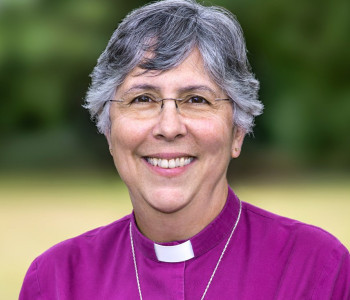
On 28 June, the Bishop of Chelmsford, the Rt Revd Dr Guli Francis-Dehqani, spoke in support of two Amendments to the Government's Illegal Migration Bill during Day 1 of the Bill's Report Stage in the House of Lords. Both Amendments were passed.
Bishop Guli speaks in support of Amendment 5 (group 1)
Summary of amendment: Baroness Chakrabarti tabled an amendment that the provisions of the Bill must not conflict with the UK’s obligations under the 1950 European Convention for the Protection of Human Rights and Fundamental Freedoms; the 1951 UN Convention relating to the Status of Refugees including the Protocol to that Convention; the 1954 and 1961 UN Conventions on the Reduction of Statelessness; the 1989 UN Conventions on the Rights of the Child; the 2005 Council of Europe Convention on Action Against Trafficking Human Beings.
My Lords, I rise to speak in support of amendment 5 tabled by Baroness Chakrabarti.
During Committee Stage, a comprehensive debate took place during which different cases were made by distinguished lawyers across the House about the place of international law as it relates to our domestic lawmaking.
Notwithstanding the different interpretations, I wish to reflect on the moral imperative for us to take seriously the commitments we have made in past decades. Those commitments have value in themselves, but they have also come to define the country we are and aspire to be, and they are part of why we are trusted by much of the international community and held in high regard.
Treaties such as the Refugee Convention and the UN Convention on the Rights of the Child set out clearly the rights of people who, due to their particular circumstances, may not be able to speak up for themselves. In many cases, this country has led the way in drafting the treaties named in the amendment. We should be proud of our involvement in advocating for the rights of every single human being. As Christians, we celebrate anything which affirms our conviction that we are all created in the image of God, worthy of value, dignity and safety.
Ensuring that international treaties of this nature are taken seriously in this country, and in this Parliament, is especially important given much of the unfortunate rhetoric and misinformation present around the Bill and last year’s Nationality and Borders Act. Language matters, my Lords, and it forms perceptions, sometimes false perceptions. For example, we hear repeatedly that refugees should claim asylum in the first safe country they reach, even when the majority of refugees already do this, even though the Refugee Convention makes no such obligation on people to claim asylum where they are.
The Refugee Convention states, and I quote, ‘Protection is not a simple concession made to the refugee: he or she is not an object of assistance, but rather the subject of rights and duties’. If we move away from this indisputable legal principle which underpins the human rights framework, not only will our reputation be at stake but so too will the spiritual health of the nation.
Bishop of Chelmsford
28.06.23
Bishop Guli speaks in support of Amendment 14 (group 6)
Summary of amendment: Lord Dubs tabled an amendment to make asylum and human rights claims admissible from unaccompanied children, continuing the current policy under which unaccompanied children’s asylum claims are not subject to the inadmissibility regime.
My Lords, I support both amendments in this group but in particular I am pleased to be able to speak in support of amendment 14 of which my noble friend, the Lord Bishop of Durham is a co-signatory but unable to be present today.
This Bill will prevent potentially thousands of children from ever claiming refugee protection in the UK however serious their protection needs may be and disturbingly, regardless of the fact that they may not have had any say in the decision to travel here irregularly. Let’s be absolutely clear, this means vulnerable unaccompanied children who have fled unimaginable horrors will arrive to find they will be detained and then potentially accommodated by the Home Office outside the established care system. And this is all, not in order for their asylum case to be heard and assessed, but simply to deter others.
Given that there are no return agreements yet in place and the Government has not provided any new information as to how returns will exponentially increase, the overwhelming majority of individuals will be left to languish in perpetual legal limbo and financial precarity. I would argue this is unacceptable for any asylum seeker but for an unaccompanied child, it is unforgivable.
Last year, close to 9 out of 10 separated children were granted refugee status. For unaccompanied children arriving from Afghanistan and Eritrea, 99% were granted status. It is these children, those with a genuine need for protection, who will be left outside the asylum system unless the Government changes course.
Children’s development is intrinsically linked to secure attachment and safety, but the state is choosing to prescribe for them an uncertain and harmful future. This is counter to the Home Secretary’s duty to safeguard and promote the welfare of all children and to prevent punishment of a child on the basis of status or the activities of their parents, as obligated by both domestic and international law.
The amendment would grant re-entry to the asylum system for those separated children the Secretary of State is unable to remove. It is a pragmatic measure that would go some way towards protecting children from these “adverse impacts” - that are neither tolerable nor justifiable.
Bishop of Chelmsford
28.06.23