29 February 2024
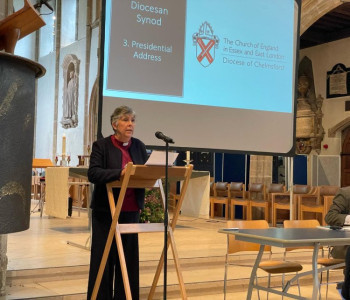
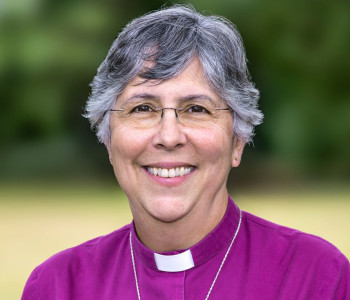
On Thursday 29 February, the Bishop of Chelmsford, the Rt Rev Dr Guli Francis-Dehqani opened a House of Lords Grand Committee Short Debate, repeating calls for a long term national housing strategy with cross party support.
On the same day, Bishop Guli asked a supplementary question on Holy Sites in Jerusalem and took part in a short debate on the role the UK could play in supporting health workers in Myanmar.
Short debate on Housing
The full debate can be watched on the Parliament Live TV website here.
My Lords, it’s a great privilege to open this debate. I’m grateful to all noble members who’ve signed up to speak and look forward to hearing from such a great wealth of experience and expertise.
My Lords, we are in the midst of a housing crisis. For too many people in the UK, ‘home’ isn’t a place of safety and security, but somewhere that is expensive or temporary, insecure or unhealthy. There are 140,000 children living in temporary accommodation, 1.2 million households on waiting lists for social homes, numerous young professionals consigned to be part of ‘generation rent’. Inadequate housing has knock-on effects throughout a person’s life: on their education, mental and physical health, their relationships and ability to put down roots.
But it doesn’t have to be like this. It is worth restating that decent housing is one of the basic essentials for a fulfilled and healthy life, yet we have some of the poorest quality housing in Europe. We can do better than the current system – indeed we must do better.
Today I’d like to put forward three steps which I believe we need to take in order to transform our housing system.
Firstly, we need a clear, shared vision for what good housing looks like.
Noble Lords will be familiar with a range of policy solutions that try to address individual elements of the crisis, but we need an overarching national vision. What are we working towards? A ‘fixed’ housing system isn’t just about interventions that respond to symptoms of brokenness, it is about tackling root causes, and creating a housing system we can be proud of.
Whilst there’s broad agreement that our housing system is failing, there’s no clear vision of what a ‘good’ system would look like. We might start by saying that everyone should have a home that’s a place of comfort, safety and security. Our homes should sustain us and help us maintain physical and mental wellbeing. They should offer access to work opportunities and public services, to peace and quiet for relaxation, and places to socialise with family and friends, where children can grow, play, study and achieve their full potential. In short, we might say that decent, affordable homes should be available for every household.
It is possible to realise these aspirations, if all political parties and stakeholders agree on a common vision of good housing, and a roadmap for getting there.
That’s why, secondly, we need a long term national housing strategy.
In 2021, the report by the Archbishops’ Commission on Housing, Church and Community concluded: “Our most important recommendation is that Government should develop a coherent, long term housing strategy.” Working in parallel was the Affordable Housing Commission, chaired by the noble Lord, Lord Best – whose contribution I’m looking forward to hearing today – in partnership with the Nationwide Foundation. It made similar, equally strong recommendations, calling on the Government to: ‘make affordable housing a national priority and to put it at the centre of a national housing strategy.’ In advancing these recommendations both commissions echoed many other recent housing investigations.
My Lords, most experts agree that the housing system is failing in substantial part due to the absence of a long term strategy; indeed, reactive, short-term, and contradictory policy interventions have even exacerbated the crisis. We need an appropriate strategy to pull together disparate policy goals and short-term targets into something comprehensive, leading to realising a shared vision of good housing.
Decades of consistent action are required to address the challenges which make up the current housing crisis, because years of failure have got us into the situation we face today. It’ll take a generation to transform our housing, so we need to think in terms of ten, twenty or thirty year horizons. And a strategy is far more than achieving housebuilding targets; it must take into account all tenures and aspects of the current system, improving our existing stock as well as building new homes.
I’m confident we can achieve this long-term vision and strategy. But it will take more than just good intentions.
So thirdly, for this proposal to be effective, we’ll need the commitment of the main political parties, and a governance mechanism to keep it on track. All parties will need to have a sense of ownership of the vision and strategy in order for it to survive changes of government. That’s why it must be comprehensive in offering good news for all: owner occupiers, social housing tenants and private sector renters, as well as those with specialist housing needs.
The agreed housing strategy will require a statutory footing to ensure that it has the longevity and resilience to be carried out over a sustained period. Otherwise, policy decisions could be driven by short term political aims to the detriment of the long term housing goals.
One idea for putting a robust governance structure in place is to create a Housing Strategy Committee, modelled on the existing Climate Change Committee, to provide annual progress reports to Parliament and to hold the government to account. Specific and robust targets will need to be set, based on need and the economic, political and social context at any given time.
My Lords, today I’ve put forward three fundamental steps which I believe will need to be taken to transform our housing system in the long-term. There is no quick fix, but that doesn’t make this response less urgent. We must build a shared vision, a shared strategy, and shared political will to deliver it over a generation. In my role as lead Anglican Bishop for Housing, I hear constantly that the housing system is broken. I’m urging all political parties to rise to that challenge today.
I would welcome a commitment from each party to prioritise creating a long term strategy for housing, and to commit equally to working with the other parties to ensure it has cross party and therefore long term support. No one party is going to be able to turn around our broken housing system – it calls for a shared endeavour and a common commitment to prioritise current and future housing needs over short-term political advantage. I would welcome further conversations with members from all political parties on shaping this vision, forming a strategy and ensuring it is delivered.
My Lords, our homes and communities are fundamental to our lives flourishing. The current system is broken, but with long-term, concerted and coherent action, we can transform our housing system, so that everyone has a decent, affordable place to call home. Let’s rise together to this challenge, and together consign the current housing crisis to history.
Short debate on the role the UK could play in supporting health workers in Myanmar.
Lord Crisp to ask His Majesty’s Government what assessment they have made of the role that the United Kingdom could play in supporting health workers in Myanmar and contributing to the reconstruction of the country’s health system. (Question for Short Debate taken in Grand Committee).
Question from the Bishop of Chelmsford
My Lords, I thank the noble Lord, Lord Crisp, for securing this important debate, and for his commitment to raising the profile of this issue in this House.
This time nearly a year ago the noble Lord asked an oral question about health workers in Myanmar in your Lordships’ House. The picture then was stark, but NGOs agree that in the intervening year, the situation in Myanmar has deteriorated. 104 health workers have lost their lives and many more have been detained in the three years since the coup. While I certainly echo the congratulations to the UK government which we have already heard for a number of impactful training and partnership programmes, it is clear that more needs to be done.
We have heard about the appalling attacks on health workers, which have rightly been thoroughly condemned. I’d like us also to spend some time considering the broader humanitarian situation and its impact on the country’s health system.
I don’t have a personal connection with Myanmar but like many others I do have a concern that this country should have a positive impact in places where there is suffering due to humanitarian disasters and injustice. So, to emphasise what other noble Lords have said, we know that where there is internal displacement and humanitarian need, it can become all but impossible to access reliable and high-quality healthcare. The Royal College of Paediatrics and Child Health describe Myanmar’s health system as having all but collapsed, and the number of internally displaced people has now risen to 2.6 million. In such situations, how can adequate healthcare provision be provided?
Communicable diseases are on the rise, and progress that had been made in Myanmar against diseases like malaria and tuberculosis has been reversed. Infectious diseases invariably spike in times of humanitarian crisis. Between 2019 and 2022, there was a sevenfold increase in malaria cases in the country, which can primarily be attributed to unrest and a weakened health system. This is having a knock-on effect on neighbouring Thailand, where cases more than doubled over the same period. Displaced people are crossing the border to seek the medical treatment they cannot access in their own country.
The UK is a significant funder of the Global Fund to Fight AIDS, TB and Malaria. What steps, then, does the minister think can be taken to ensure that interventions from multilateral organisations like the Global Fund can be accessed by those who need them in Myanmar? And what other interventions, multilateral or bilateral, might effectively be offered by the UK to alleviate the pressing medical need?
The long-term effects of depriving anyone of healthcare – particularly children – cannot be overstated. Children are not receiving vaccines, and this could have an impact on them for the rest of their lives. The WHO has described Myanmar as now having one of the lowest health worker availability levels in the whole region. I echo the calls from noble Lords for increased humanitarian aid to tackle immediate need, but might the noble Lord the minister also be able to report on how the government might support efforts to build up a larger healthcare workforce in the country for the long-term?
Question to Minister of State for the Foreign, Commonwealth and Development Office about Holy Sites in Jerusalem
In the House of Lords Chamber, Bishop Guli asked Lord Ahmad of Wimbledon, Minister of State (Foreign, Commonwealth and Development Office), a question about Christian and other Holy sites in Jerusalem in relation to plans for a national park on the Mount of Olives. Bishop Guli's question and Lord Ahmad's answer can be watched below.