
11 June 2026
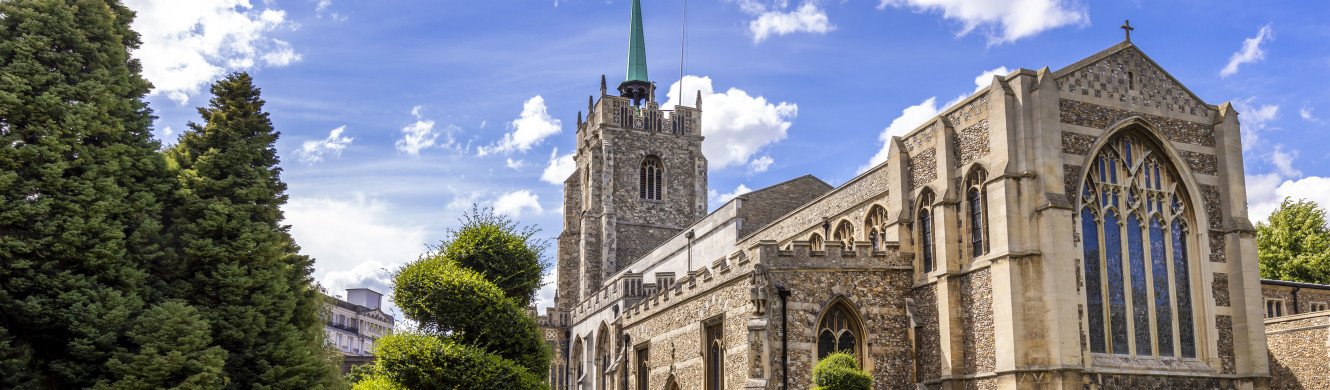
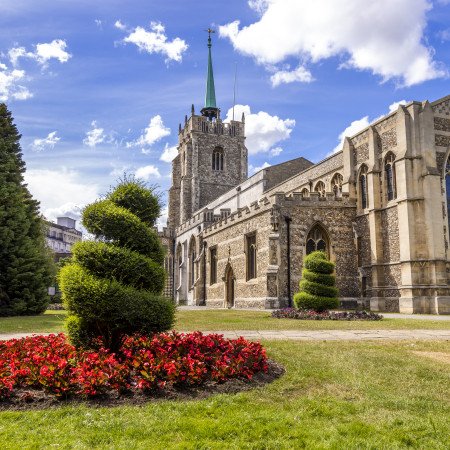
On Monday 8 June people from across Chelmsford Diocese, many of them Parish Safeguarding Officers, gathered at Chelmsford Cathedral for the Annual Service of Thanksgiving and Recommitment for all those involved in the work of Safegaurding in our Diocese.

The service was led by the Bishop of Chelmsford the Rt Rev'd Dr Guli Francis-Dehqani, and this year's sermon was preached by the Bishop of Barking the Rt Rev'd Lynne Cullens.
Bishop Lynne's Sermon can be read below.
From 1st to 14th June, as you may know, there is a campaign entitled It’s not just policy, it’s personal being run by the National Safeguarding Team. Its aim is to raise awareness of how to recognise and report safeguarding concerns, with resources designed to build confidence in responding and taking appropriate action, being made widely available.
Church of England Lead Bishop for Safeguarding, Robert Springett, writes the following
“Safeguarding in the Church of England is not simply about compliance with guidance or completing the right forms. It is about people and for those of us who seek to follow Jesus, it is about how we live out our faith. This campaign is a timely reminder that at the heart of every safeguarding concern is a human being who has taken a brave and often costly step in speaking about harm.”
Those resources will join others that support us in keeping people safe in the church, of course. We have the national standards, we have designated leads at local level, in the shape of our Parish Safeguarding Officers, we have safer recruitment, and a programme of comprehensive training which is mandatory for clergy, licensed lay leaders and others in designated roles. And we have a professional, experienced staff team working under the Dicessan Saferguarding Officer who advise, guide, direct and support us in our safeguarding responsibilities.
All of these elements of the structure serve one vital purpose: to make our Church, so far as humanly possible, safe for everyone.
But there is one factor that throws a spanner in the works and makes everything so much more complex in our approach to safeguarding in the Church.
And that is the life and teachings of Jesus Christ.
Wouldn’t it be simpler if Jesus had taught that the Church should be a private members club, if he’d directed us to vet everyone at the door, commanded us to keep out the risky, the marginalised, the outcast and the stranger?
But Jesus said and did exactly the opposite of that, of course…whereas the world says ‘watch out for them, they’re not from around here’, Jesus says ‘I was a stranger and you invited me in’; where the world says ‘avoid those with murky pasts’, Jesus says ‘I have not come to call the righteous, but sinners’. Where the world says ‘they come to this country and expect us to support them…they can think again’, Jesus says ‘I was hungry and you gave me food, I was thirsty and you gave me drink, I was a stranger and you welcomed me’.
At the start of John’s Gospel, we are told (in the words of author David Rhodes) that in Jesus ‘we see nothing less than the word of God in human form: the mind of God, the reason of God, the will of God embodied and expressed in this person’.
And from that position of divine authority Jesus preached and lived out this radically inclusive vision of God’s kingdom come to earth.
God’s kingdom, he tells us, embraces all, welcomes all, values all. And as the Church we are called to do likewise, called to see our church walls as porous with a constant ebb and flow of people of every kind. And though that blesses our Church with the richest variety of gifts, it also brings with it risk and threat.
Recorded in Matthew’s Gospel chapter 13, Jesus tells the Parable of the Dragnet.
‘the kingdom of heaven is like a dragnet that was thrown into the sea and gathered fish of every kind. When it was full, the fishermen pulled it up on the shore. Then they sat down and collected the good fish in baskets but threw the bad away. This is how it will be at the end of the age. The angels will come and separate the wicked from the righteous”
And in a similar way, the Church gathers up all kinds of people – from the wealthy to the destitute, from the new-born to the aged, from the known and familiar, to the unknown and unfamiliar.
The dragnet of the Gospel, and the Church founded upon it, draws all kinds…the wicked and the righteous …and the problem that we have is it’s so hard to tell who is which…It would be so much simpler if the good and the bad were easier to differentiate…but the stranger or the dubious looking can be righteous, and the person of apparent impeccable virtue known for years to everyone in the church community, can have the darkest heart and the most malign intent
And Jesus’ teachings tell us, of course, that we have a God of love, and of mercy. We believe, as in our reading from the letter of James, that the prayer of faith heals the sick and sins are forgiven…
So how do we live out our faith in a God of forgiveness and redemption who desires to draw everyone to him - who seeks to heal and transform the lives of those who do wrong - whilst protecting and caring for the young and the vulnerable in our churches for whom they might pose serious threat?
We do so by changing how we view safeguarding, I think; viewing safeguarding not as an example of administrative institutional bureaucracy – an accusation still levelled by some in our churches - but seeing that safeguarding is a direct measure of our spirituality and our discipleship. It is the practical public outworking of the command to love and serve our neighbour.
In his book Faith in Dark Places David Rhodes writes ‘God’s relationship to the world is not something that any one of us can possess; it is not a cosy one-to-one relationship between an individual and God. It involves other people. Jesus summed this up by saying not just that God is unconditionally loving and we should love God in return with all our heart, but that we must also love our neighbour, as we love ourselves’.
And because we acknowledge that our relationship to safeguarding others is intrinsic to our love of God and is a discipleship issue, we must acknowledge, lament and repent where we fail the vulnerable as individuals, and as an institution.
The wicked have been found in our own leadership, both lay and ordained.
We must continue to learn from past mistakes. We must listen to the courageous voices of survivors and continue to advocate in their fight for justice. Isaiah tells us that God’s heart is set towards those who are broken-hearted, that he longs to see those living in the shadow of others’ sin set free. We must work tirelessly to build such a Church, a church where every one of us bears responsibility for shaping and sustaining a robust, Christ-centred culture of safety; where we witness to the fact that true repentance results in action and there is no room for complacency; where we affirm that protecting the vulnerable will always take priority over protecting our own reputation; and where we live out an unwavering quest for transparency, for vigilance and for healing.
Tonight we meet together to pray for those who have suffered harm at the hands of others in the Church and to repent our part in failing to protect the vulnerable; and we pray too for wisdom, for courage and for strength as we continue to work together to balance the welcome required of us by our God of love, with the commitment to truth and accountability demanded of us by our God of justice. In Jesus’ name, we pray. Amen.


