
15 June 2026
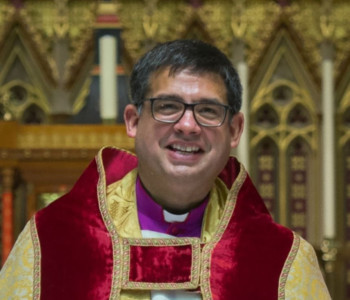
To mark the start of Refugee Week 2026, the Bishop of Chelmsford, the Rt Rev'd Dr Guli Francis-Dehqani has written a reflection that can be read below.
The theme of Refugee Week this year invites us to reflect on what it means to live with courage and welcome those who have sought sanctuary among us. Given the recent division and vitriol we have seen expressed, notably on the streets of Belfast, it is a timely and bold reminder that we must stand firm against forces who seek to exploit tension and difference and even question the right of particular communities to belong in the UK.
The theme of courage is deeply woven throughout scripture as God’s people are repeatedly called to choose courage over fear. Courage is not the absence of anxiety or uncertainty; rather it is about the decision to trust God and act with compassion even when the path ahead is unknown. The words “Do not be afraid” are spoken to Abraham as he journeys into unfamiliar land, to Moses as he confronts oppression, to Joshua as he leads his people into a new future and to a young pregnant Mary, as she accepts God’s unexpected call on her life. Jesus himself, entering a world marked by displacement and insecurity, chose to live not by fear but to identify with those on the margins and bridge societal divides.
The bible is clear, we must resist narratives of fear and distrust. When tensions rise, the answer is not to withdraw or hold others at arms length, but to seek deeper connection as Jesus did. Christians are called to see people not as problems but as neighbours to love. We must resist the temptation to single out any particular group, scapegoating them because of our wider anxieties, but have the courage to listen to unfamiliar stories, build relationships across differences, speak up for justice and create communities where all can belong.
A healthy and, indeed, a democratic society, depends on our ability to bridge differences, to find common ground and move forward together rather than apart. But too often we see disagreements framed as binary moral conflicts that demand people choose a side. This kind of polarisation pushes us into opposing camps, making it harder to recognise our shared values and aspirations. Community cohesion is developed and sustained by habits of respect and a posture of inclusion; by legal protections, mutual support and engagement, and by a shared sense of belonging.
This week, while listening to tributes for Jo Cox who was tragically murdered while serving her community as an MP in 2016, I was reminded again that hope is not passive. It is something we build, courageously and intentionally through action, service, and our commitment to one another. I was reminded of this also when meeting with a group of Rabbis from across Essex and East London recently. We listened to one another and committed to building stronger relationships of mutual trust and support.
The word for courage comes from the Latin, cor, meaning heart. Fear tends to close the heart -fear of difference, of scarcity, change, or vulnerability. But courage is the practice of keeping the heart open - to God, to neighbour, and especially to the stranger. Courage allows us to encounter another person not as a threat but as a fellow human being created in God's image. In a world where suspicion can harden hearts and difference can create distance, welcoming the stranger therefore becomes an act of courage. It allows us to respond not out of anxiety but from the deepest centre of our being, where God's love dwells. "Be strong, and let your heart take courage, all you who wait for the Lord!" (Psalm 31:24)
May we, this week and always, move beyond fear, prejudice and indifference to become communities of generous welcome, reflecting the heart of God. If you would like to learn more about Refugee Week and get involved, please check out their resources and ideas for simple acts.