
5 June 2026
The Bishop of Chelmsford, the Rt Rev'd Dr Guli Francis-Dehqani, was Duty Bishop in the House of Lords for three days during the week beginning Monday 1 June. This Lords Spiritual role involves being on duty to respond to business in the House as well as saying prayers at the start of each day.
Monday 1 June
Meetings
On Monday 1 June, Bishop Guli attended three meetings, all with a particular emphasis on developing relationships with Jewish colleagues and exploring ways to work together well and encourage greater understanding. The first meeting was with one of the co-leaders of the Movement for Progressive Judaism, Rabbi Charley Baginsky; the second was with Elizabeth Harris-Sawczenko (Vice President of the Council of Christians and Jews and Ambassador for the Alliance for Middle East Peace) and her colleague Rachael Liss; and the third was with the Attorney General, Lord Hermer in which they also talked about the wider situation in Iran and the Middle East.
Launch of the National Month of Prayer for Toddler Groups
Bishop Guli attended the launch, in Parliament, of the National Month of Prayer for Toddler Groups. Organised by 1277 Make Them Count – an ecumenical network of church-based Toddler Group leaders – the month of prayer encourages churches to pray for the work of their toddler groups as they reach out to serve the needs of local families. Bishop Guli spoke at the launch event, thanking those who organise toddler groups and recalling the importance of toddler groups to her, when her own children were young. She also read a prayer that she had written for the launch and was pleased to meet leaders from toddler groups at St Luke's Moulsham and Emmanuel Billericay in the Diocese of Chelmsford.
-
Read Bishop Guli's prayer for the National Month of Prayer for Toddler Groups
Lord Jesus Christ,
Good Shepherd who knows each us by name and gathers us into one flock,
look with kindness on the toddler groups across the nation.
Bless those who welcome little ones and their families,
those who offer care, companionship, and safe places to grow,
Strengthen them in patience, joy and compassion.
Draw near to every child entrusted to their care,
that they may flourish in body, mind and spirit,
and come to know the warmth of your guiding love.
As we leave this place,
grant us grace to follow your voice with courage and hope,
and to work together for the good off all whom you call your own.
You who live and reign with the Father and the Holy Spirit,
one God, now and forever.
Amen.
-
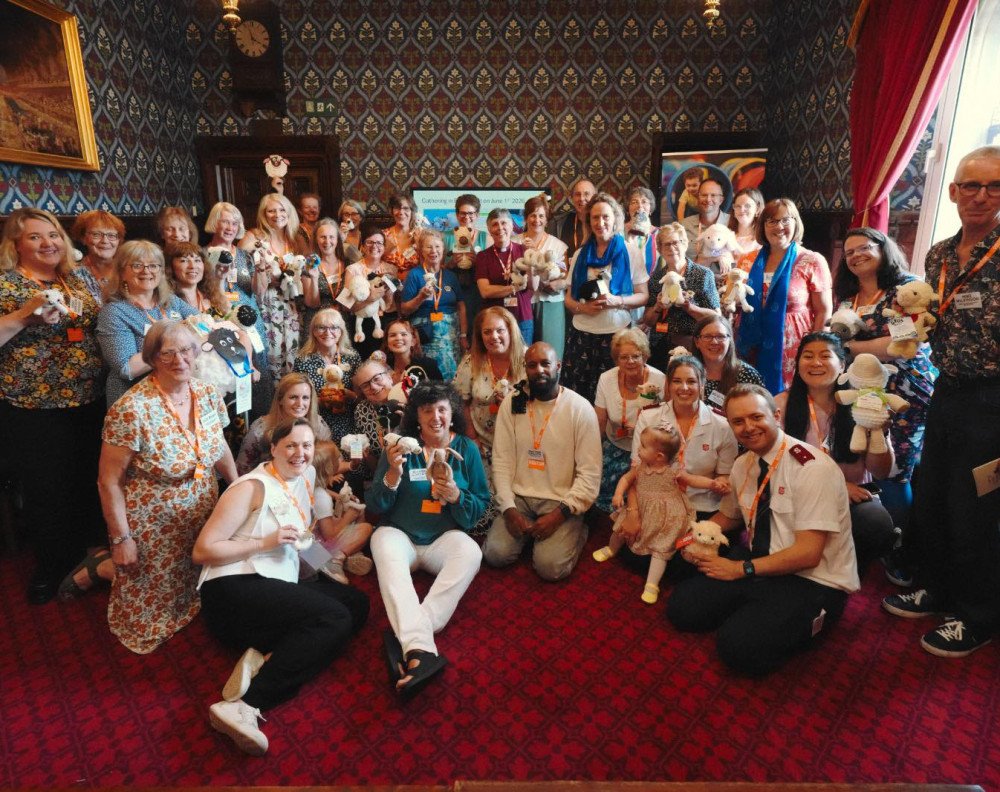
The launch, in Parliament, of the National Month of Prayer for Toddler Groups
-
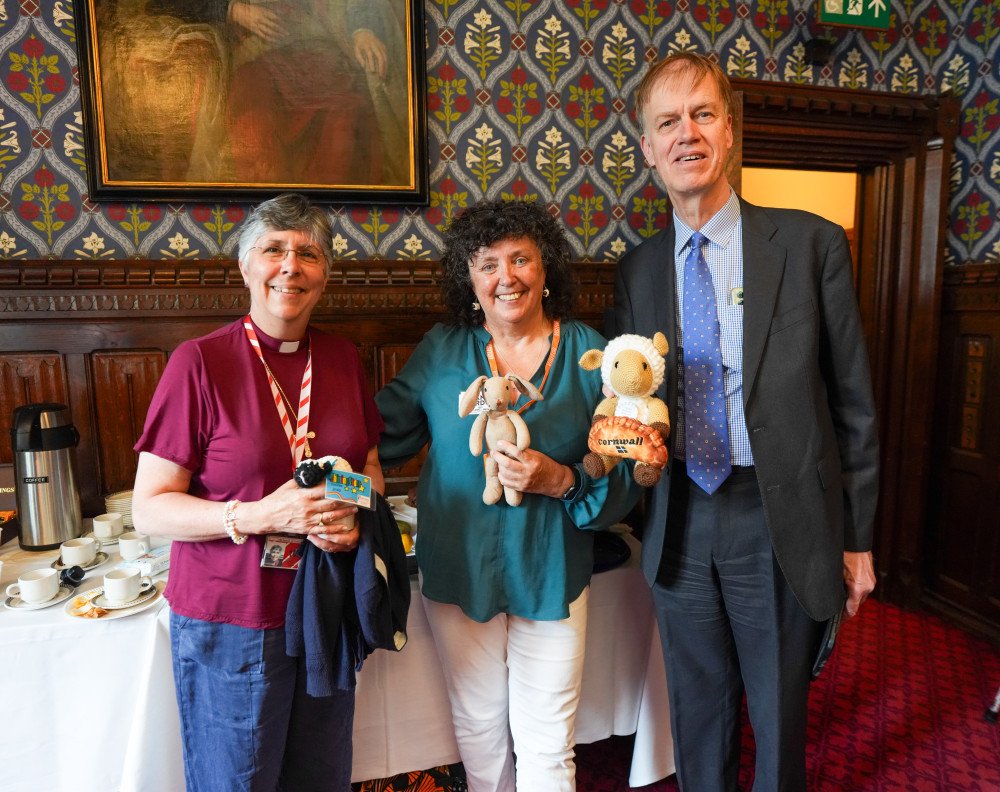
Bishop Guli pictured with Joanna Gordon CEO of 1277 Make them Count and Sir Stephen Timms, Member of Parliament for East Ham and Minister of State for Social Security and Disability, who also spoke at the launch
Tuesday 2 June
Housing meeting with the Chair of the Lords Built Environment Committee
Bishop Guli met with Lord Gascoigne, Chair of the Lords Built Environment Committee. At the meeting, Bishop Guli, who is the Church of England lead Bishop for Housing, discussed the Government's forthcoming 10 year strategy for housing and the role the Church of England might play, once it is published, particularly in helping to build communities as New Towns are developed.
Dinner hosted by the Jordanian Ambassador to the UK in collaboration with the All Party Parliamentary Group on Christianity in the Holy Land
Bishop Guli attended a dinner hosted by His Excellency Mr Manar M. Dabbas, Jordanian Ambassador to the UK, in collaboration with the All Party Parliamentary Group on Christianity in the Holy Land. During the dinner there was discussion about the current situation in Israel, Palestine and the wider Middle East.
Wednesday 3 June
'Christ in the Stranger' - HeartEdge Conference speech
Bishop Guli was not on duty in the House of Lords on Wednesday 3 June, and attended the HeartEdge Conference in Birmingham on the theme of 'Christ in the Stranger'. Bishop Guli was the keynote speaker at the conference and her speech can be read here.
Thursday 4 June
On Thursday 4 June, Bishop Guli spoke in two debates in the House of Lords Chamber.
Debate on the adequacy of law on the regulation of fertility treatment
-
Read a transcript of the speech
My Lords, I recognise the depth of expertise in this chamber and also that my background is not a scientific one. However, it is incumbent on all of us to engage in these crucial issues which hold wide significance and implication.
I approach this debate in the knowledge of what it is to long for children deeply. I am profoundly grateful for the gift of my own three children, especially following the experience of difficult and intrusive treatment over many years, including miscarriages and several cycles of IVF. Indeed, if I maybe personal, I was for a number of years a patient under the care of the noble Lord Winston for whom I have both affection and great admiration and to whose speech I listened to very carefully indeed.
I want to recognise the highly complex and agonising experiences of infertility that many go through, and of what it is like to have an unfulfilled longing for a child. This debate speaks into a profoundly challenging scientific, moral, legal and emotional context.
I recognise that the lives of my children are the result of extraordinary scientific and medical advances. But ultimately, like any child, they are a remarkable gift from God. Throughout the treatment I was always aware that they were never a right of mine to be claimed. Good legislation, thoughtful limits and sober weighing of the implications of those limits is vital if we are to continue responsibly in this work, with clarity for all. Indeed, I know personally the importance of those limits to temper what can be a very human dimension which, if unchecked, can lead to desperation and a willingness to do anything to have a child.
Turning to the proposed changes to the law from the HFEA in their 2023 report, the policy team of the Church of England responded to the consultation about the recommendations put forward at the time, and which I am also drawing on. They and I recognise the important issues highlighted and the need for a regulatory update, especially around patient safety, licensing and the HFEA’s ability to incentivise compliance within fertility clinics.
With the development of the online world, the landscape for people accessing information and selecting their options is changing significantly. There is much misleading advertising on social media, including claims about guaranteed success for IVF treatment. On such a highly emotional and charged issue, this is deeply troubling, and there is a clear case to be made for ensuring stricter regulation of services.
The moves towards patient safety, and the HFEA having sufficient powers to take action where patient safety is at risk also seem clear to me.
There are some proposals in the HFEA Report however, which I believe must be considered with more caution.
Firstly, the report highlights the 14-day limit on embryo experimentation as something that could be changed in light of scientific developments. In 2003 the General Synod of the Church of England affirmed “the sanctity of the human embryo and therefore the need to treat it with profound respect.” Though I recognise the possibility for research into the development of embryos between 14 to 28 days (and from that the possibility of therapeutic benefit), it remains the case that ‘individuation’, and identity, is significant to moral status, and so I believe that the 14-day limit should not be overstepped.
Secondly, the report proposes changes to the way consent is obtained. In order to prioritise patient safety and access to the best possible care, it seems vital that information can be shared with other healthcare providers. My caution is around the proposals related to changing the consent approach to one which is package-based.
Anyone undergoing or considering fertility treatment and having a conversation with a specialist is likely to be experiencing intense stress and possible feelings of overwhelm. That is precisely why it’s essential they understand absolutely what they are proceeding with. Each part of the process is weighty and should be considered carefully according to the conscience of the individual or couple concerned – it is right, proper and honouring of them to ensure that this weighing up is enabled and facilitated.
Similarly, the proposed change to the consent regime for research on embryos – if a decision has been made to donate embryos to scientific research, there is likely to be a variety of preferences and approaches. Though some may be content for their embryos to be used for any available research, this won’t be the case for everyone. Maintaining the requirement for consent to each named project will be important for some, and so should not be overlooked.
I’ve touched on just a handful of issues for consideration in this complex and important debate, but what is clear, my Lords, is that if legislation is to be brought, it must be preceded by full consultation which facilitates public understanding and engagement. These are matters not only of personal importance - though I understand that dimension all too well – but of societal importance, and any proposals to change the law must be treated both with compassion and with great care.
+Chelmsford, House of Lords, 4 June 2026
The Church Times also reported on Bishop Guli's speech about fertility treatment regulation. The article can be read here.
Short debate on the assessment of the UK’s declining birth rates and the impact of this on demographic shift
-
Read a transcript of the speech
My Lords, as we have heard, declining birth rates carry both profound economic and social consequences.
The story of human origins in the Book of Genesis begins with a God-given mandate to populate the earth and supports the basic goodness of family life.
The Christian tradition has consistently affirmed the value of children. The baptism liturgy declares that children are a blessing and a gift from God. That conviction remains important, not only for people of faith but for society as a whole. Children represent continuity, connecting us with the generations that have gone before us and giving hope for the future. They are a gift to the whole community, not only to their parents and others who may raise them.
It is important, however, to understand the complex factors behind declining birth rates: which include women’s choice as mentioned by the Noble Lord Davies of Brixton, but also fearfulness about the future, difficulties in combining career and family, and financial pressures. The expense of housing, student loan repayments and the rising cost of living all contribute to delaying family formation. Couples now marry later, start a family later and often have fewer children than hoped for – not least because by the time financial circumstances may seem more favourable, biology might well be less cooperative.
As I’ve said before in this chamber, we’re witnessing the unravelling of an unwritten social contract: that if you obtain a decent education and work hard, you should be able to save for a deposit, buy a home, start a family and provide stability for your children until they can do likewise. For many young adults today, that promise feels increasingly out of reach: it takes many years to save for a deposit, and then two stable salaries are typically needed to pay the mortgage, with an average house now costing 7.6 times an average salary – rising to 10.6 in London.
High house prices also limit the ability of younger generations to build housing wealth and financial security, contributing to the growing crisis in intergenerational equity.
Whilst there are limits to what the State can and should do, there is much within government’s power to address some of the barriers I have described and to legislate in such a way that supports families of varying shapes and sizes as outlined so clearly by the Noble Baroness Nargund in her opening speech.
I am heartened by the Government’s commitment to Family Hubs. At their best, they can provide valuable help and support for all parents and families. However, they remain something of a postcode lottery. If they are to make a difference across our communities, they should be accessible and attractive to all families, not only those experiencing crisis, and they should be embedded with a wider ecosystem of support involving voluntary organisations, community and faith groups.
Secondly, the Government’s Family Test should be strengthened. At present, it is too weak, inconsistently applied and insufficient to ensure that the effects of policy on family relationships are properly considered across government. I therefore urge the DWP to review the Family Test, strengthen its application and make it a statutory requirement so that the wellbeing of families is embedded more firmly across government decision-making. This would signal to prospective parents that their choice to have children will be supported by the State. Can I therefore ask the Minister whether any steps have been taken to review the Family Test considering concerns about declining birth rates?
My Lords, demographic change presents us with serious challenges, but it also invites us to reflect on the kind of society we wish to build. If we value families, if we welcome children as a blessing and a source of hope, and if we want future generations to flourish, then we must ensure that those who wish to marry, establish a home and raise children are not prevented from doing so by barriers that could be avoided.
+Chelmsford, 4 June 2026